


Although James is listed on the war memorial plaque in St Mary’s Church he does not appear to have ever been a full-time resident of Woodham Ferrers. His connection is through his great uncle Henry Barnett Nash who lived in Willow Grove and was an active member of the community throughout the 1930’s and it is very likely that James regularly visited him there. James’ grandfather Isaac Nash was Henry’s brother.
Jimmy was born in 1920 to Harry and Mary Eleanor Nash nee Marshall of Winchcombe in Gloucestershire. Harry had served in the Great War but was discharged in 1917 as medically unfit. He married Mary at Winchcombe on 8th November 1915.
Jimmy joined the Somerset Light Infantry in July 1940 following his employment with British Cellophane at Bridgewater. Two years later, subsequent to his promotion to sergeant, he volunteered for airborne forces and trained as a glider pilot. The Glider Pilot Regiment was formed in 1942 and took volunteers from other army regiments who held the rank of sergeant or above. The volunteers undertook full flying training with the RAF before qualifying as a glider pilot.
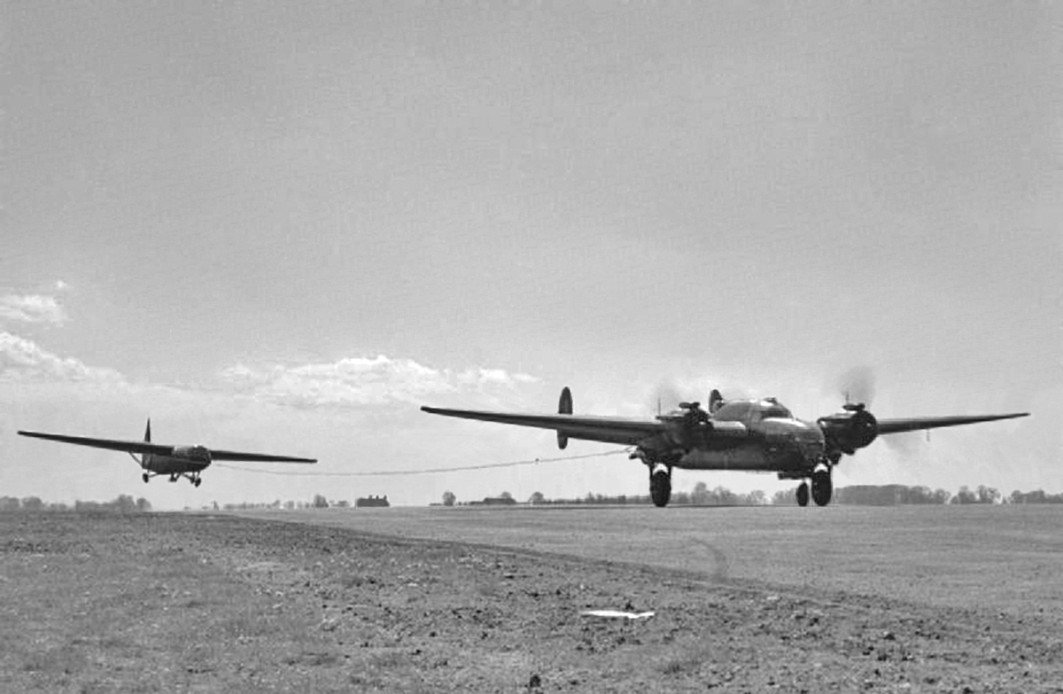
Just after midnight on D-Day the first troops to land were the glider born troops sent to capture and hold the bridges over the Orne and Caen Canals in one of the most daring operations of the Second World War. Just as they were touching down and firing the opening shots of “The Longest Day” the second and third wave gliders that included Jimmy in 4 Flight, “B” Squadron were just departing.
Jimmy was second pilot to Sergeant Howard Harris and they are recorded as leaving Brize Norton Airfield at 01.26 being towed by an Albermarle aircraft P1409 of 297 Squadron which was carrying the chalk number of 32 showing the position in the take off order.
Just over an hour later they would be cast off from the towing aircraft to make the risky unpowered descent over blacked out enemy territory and through anti-aircraft fire to hopefully land at Landing Zone “N” just north of Ranville. They landed successfully and safely unloaded their cargo of men and equipment of 5th Parachute Brigade, 6th Airborne Division.
Assuming they were uninjured glider pilots, following a successful landing, were expected to revert to the role of an infantry soldier and fight alongside those they had delivered until it was possible to link up with the troops from the beach landings and return to the UK so that they could operate as pilots should they be needed.
Jimmy was killed some nine hours after having safely landed when a German artillery shell landed nearby, mortally wounding him whilst they were moving towards their Rendezvous Point. He was just 24 years old.
With the success of D-Day secured the remaining pilots were returned to the UK and his co-pilot Sergt. Howard Harris visited Nash’s parents to talk them through his loss. Sadly, Harris would also be killed soon after when on another famous airborne landing this time at Arnhem on 25 September 1944.
Local newspapers told of Nash’s loss and proudly that he was likely the first man from Cheltenham to be killed on D-Day during this epic airborne assault. Despite his limited known Woodham Ferrers connections he his proudly shown on the church memorial as a reminder of one of the most epic days of World War II.
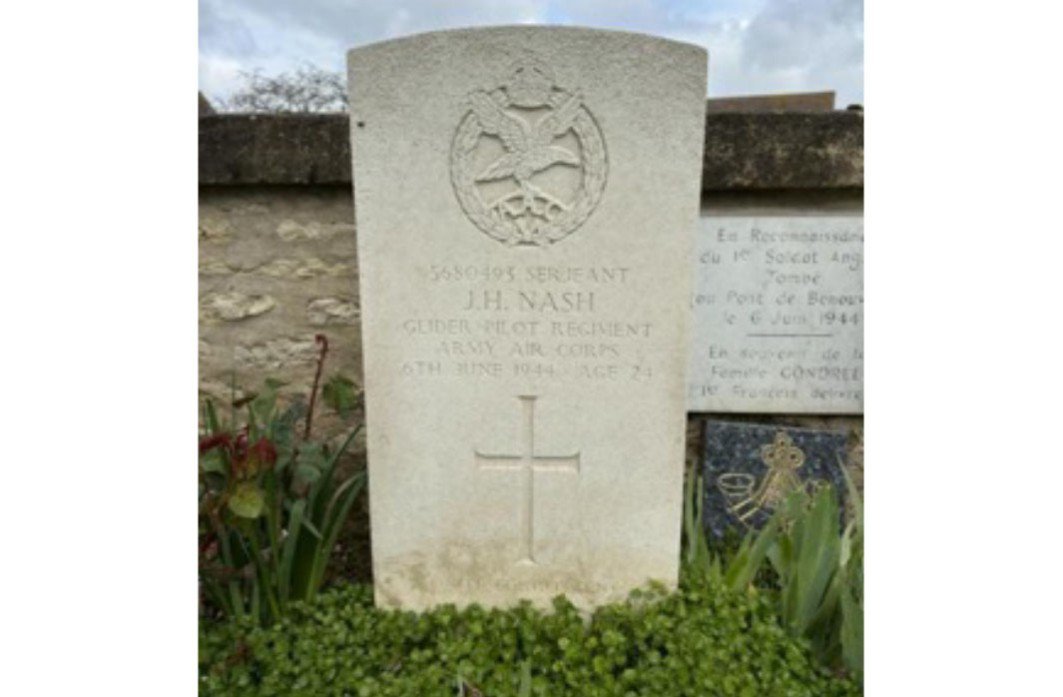
He was initially buried in the grounds of a chateau near the village of Ranville about six miles north east of Caen. He was later reburied in Ranville Church Yard.