


Harry was born on 14th November 1909 at 9 East Street, Ashford, Kent the son of Band Sergeant Arthur Dobson of the 14th (Kings) Hussars seen here in the photograph and his wife Jenny formerly Rand whom he married at Ashford Parish Church on 8th August 1906 when he was stationed at Somerset Barracks, Shorncliffe Army Camp. Arthur had served with the regiment in the Second Boer War receiving the King’s South Africa Medal with 1901 and 1902 clasps together with the South Africa Medal with clasps for Johannesburg, Diamond Hill, Belfast, Cape Colony, Orange Free State, Tugela Heights and the Relief of Ladysmith.
Harry was baptised at the parish church of St Mary the Virgin, Ashford on 26th December 1909. By 1911 Arthur is serving in India with the regiment at Bangalore, which had moved there in 1906, where he died 27th May 1911. By the time of the 1911 census when Harry was under two years old he was living with his grandfather Harry Rand and his family although Jenny was not there. Harry Rand had three daughters and five sons living at home at the time.
Jenny married Bertram Foley in Holborn, London towards the end of 1914 and by the census of 1921 Harry is again re-united with his mother and living with his step-father and his two children by a previous relationship in Lambeth.
Jenny appears on the electoral rolls with Bertram until 1927 but by 1929 she is no longer listed. Bertram survived until 1958 when he died on 31st January at Ashford, Middlesex.
Harry went on to marry Elvie Elizabeth Harris towards the end of 1933 in Bromley, Kent and the couple subsequently had two children Georgina in 1934 and Patricia in 1939. By 1939 they were living at Barrack Cottages, Woodham Ferrers and Harry was working as a plasterer.
Harry subsequently joined the army and was posted to the 82nd Anti-tank Regiment, Royal Artillery where he rose to the non-commissioned rank of serjeant, an unusual spelling.
The 82nd Anti-Tank Regiment, Royal Artillery had been formed at Canterbury in September 1941 by taking trained anti-tank batteries from other regiments to be immediately available overseas. The regiment mobilised at Butlins Holiday Camp, Clacton on Sea then sailed in November, in convoy, for the Middle-East. However, following Japan’s entry into the war, they were diverted to India via Durban in South Africa arriving in Bombay in January 1942 and then entrained for Jhansi in Central India where new guns and transport joined them. By February they were up to full strength with forty-eight two pounder anti-tank guns. On 26th March they left Jhansi and moved to join the 23rd Indian Division forming at Ranchi having survived a dusty 500 mile five day road journey. The Division then moved to Assam to stop the Japanese following their victory in Burma, now Myanmar, where part of the regiment was involved in constructing a road running to Lakhipur. In November the regiment moved to the 17th Indian Division and was then converted to a light anti-aircraft/anti-tank regiment by the addition of two anti-aircraft batteries using 40mm Bofurs guns.
The regiment undertook various tasks over the following months preparing for a Japanese attack which commenced in March 1944. During the subsequent fighting the regiment undertook anti-aircraft, anti-tank and infantry roles and was spread out supporting four different brigades.
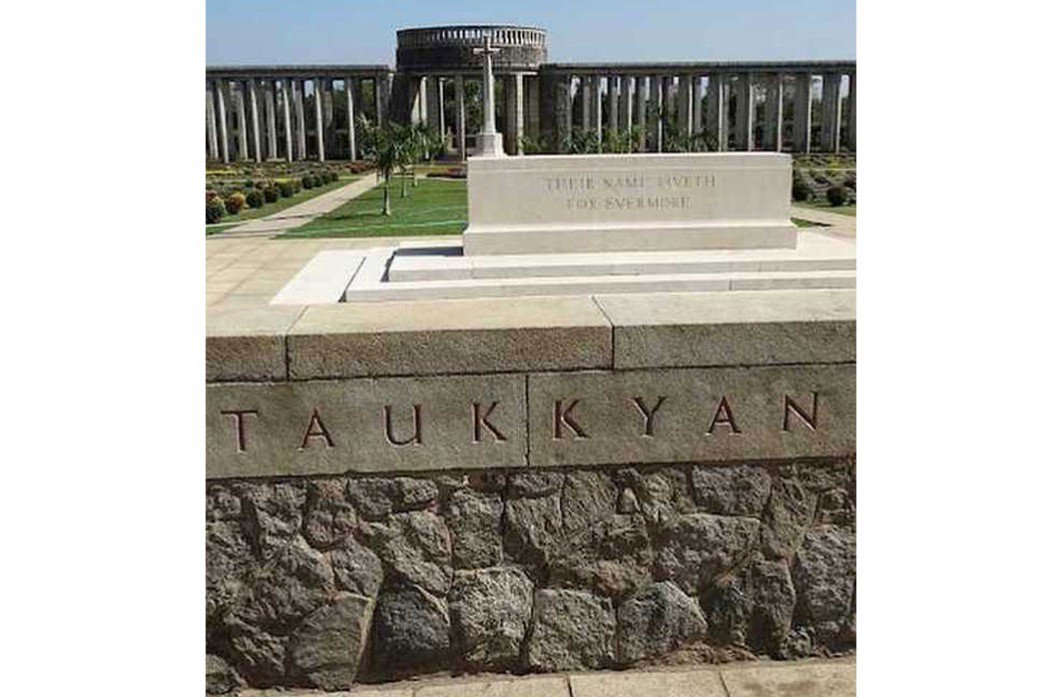
After nine months of action the regiment, along with the rest of the division, was withdrawn in September for a rest by which time they had reverted to an anti-tank role. At the beginning of 1945 the regiment, along with the rest of the division, advanced into Burma pushing back the Japanese and crossed the Irrawaddy River in late February and then advanced on Meikhta, the main enemy communication and supply base in central Burma, which fell to the allies after just four days. The regiment then dug in to expect a counter attack providing anti-tank cover and mortar fire for the infantry and was in action throughout March. Harry was killed in action on 24th March, aged 35, and was subsequently buried in Taukkyan War Cemetery, Burma now Myanmar.
Elvie lived on until she died in 1994 in Colchester.